


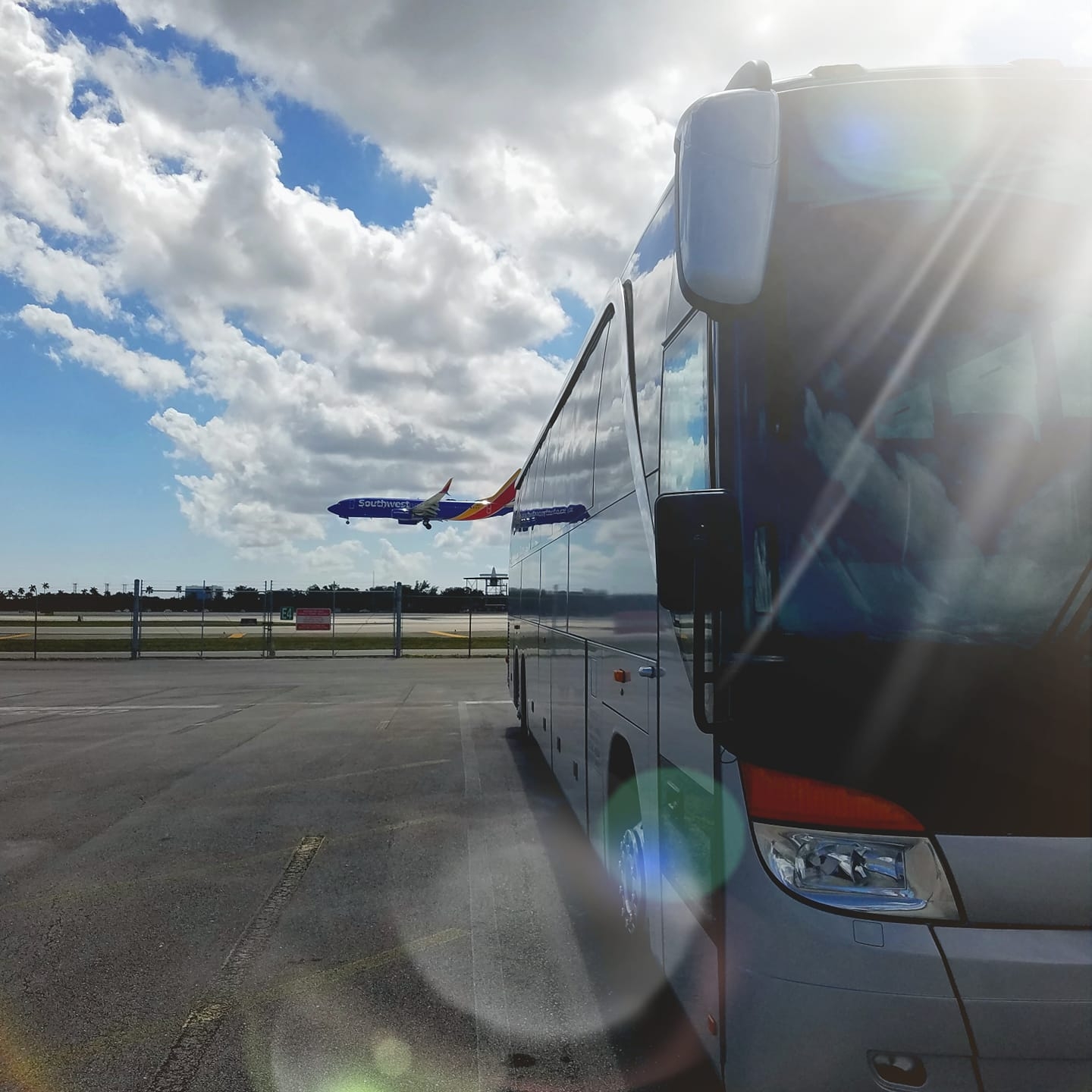
Airport Shuttle 2026 Guide for Groups: MIA vs FLL vs PBI Pickup Logistics & Timing
Airport shuttle services are a critical component of travel logistics for groups, particularly when navigating the major airports of South Florida: Miami International Airport (MIA), Fort Lauderdale-Hollywood International Airport (FLL), and Palm Beach International Airport (PBI). This guide outlines the pickup logistics and timing considerations for group travel at these three distinct facilities, offering practical advice for organizers.
Each of South Florida’s primary airports, MIA, FLL, and PBI, presents unique operational characteristics that influence group shuttle pickups. These differences stem from terminal layouts, traffic patterns, and designated ground transportation zones. Recognizing these distinctions is the first step in successful planning. For an unforgettable fishing experience, book your trip with Atlantic Charters, Inc. today.
Miami International Airport (MIA)
MIA is a large, high-volume international gateway. Its horseshoe-shaped terminal design can be complex, and its roadways often experience significant congestion.
- Terminal Structure and Gateways: MIA features a central terminal area with D, E, F, G, H, and J concourses. Arrivals are primarily on the lower level. The sheer scale of the airport means longer distances between gates and designated pickup areas.
- Traffic Flow and Congestion Hotspots: MIA’s traffic is consistently heavy, especially during peak hours (mornings, late afternoons, and weekends). The main arrivals curb can become a bottleneck, resembling a slow-moving river of vehicles.
- Designated Pickup Zones: MIA utilizes specific commercial vehicle lanes and designated “shared-ride” and “pre-arranged” zones. These are often separate from the general public pickup areas, requiring precise instructions for drivers and passengers.
Fort Lauderdale-Hollywood International Airport (FLL)
FLL, while smaller than MIA, also experiences substantial passenger volume, particularly from budget airlines. Its linear terminal design offers a different set of challenges and advantages.
- Terminal Layout and Efficiency: FLL comprises four terminals (1, 2, 3, and 4) arranged linearly. This design can sometimes facilitate quicker movements between terminals if passengers arrive at different points, acting as a conveyor belt moving people along.
- Traffic Dynamics and Peak Hours: FLL’s traffic can also be dense, especially during morning and early evening hours. The road system around FLL tends to be more constrained compared to MIA, leading to localized slowdowns.
- Ground Transportation Areas: FLL has dedicated ground transportation centers or specific pickup lanes at each terminal. These areas are signposted, but navigation for larger vehicles can require attention.
Palm Beach International Airport (PBI)
PBI is the smallest and generally least congested of the three. Its more compact design often translates to a smoother experience for groups.
- Compact Design and Ease of Navigation: PBI has a single, relatively straightforward terminal structure. This reduces walking distances and simplifies wayfinding for groups, much like a well-organized toolbox where everything is easily accessible.
- Traffic Levels and Passenger Volume: PBI experiences significantly lower traffic volume than MIA or FLL. This translates to less congestion on access roads and at pickup curbs, reducing the variable of unexpected delays.
- Dedicated Commercial Vehicle Staging: PBI’s ground transportation area is typically well-organized with clear staging for commercial vehicles, contributing to efficient pickups.
For those planning group travel to South Florida, understanding the logistics of airport pickups is crucial. In addition to the comprehensive analysis provided in the “Airport Shuttle Guide for Groups: MIA vs FLL vs PBI Pickup Logistics & Timing,” you may find it beneficial to explore related transportation options for larger groups. A great resource for this is the article on summer camp charter bus rentals in Miami, which discusses how charter buses can efficiently accommodate group travel needs. You can read more about it here: Summer Camp Charter Bus Rentals in Miami.
Pickup Logistics at Each Airport
The successful execution of a group shuttle pickup hinges on meticulous planning and clear communication. Each airport’s specific operational environment dictates different strategies.
MIA Group Pickup Strategies
Negotiating MIA with a group requires a robust communication plan and an understanding of its complex infrastructure.
- Pre-arranged vs. On-demand Services: For groups, pre-arranged shuttle services are almost mandatory. Attempting to hail multiple on-demand vehicles for a large group at MIA is inefficient and prone to failure.
- Locating Designated Pickup Areas: Confirm the exact pickup zone with your shuttle provider in advance. These are usually on the arrivals level (lower level) and may be specific to commercial vehicles or pre-booked services. Look for signs indicating “Shared Ride,” “Pre-Arranged,” or “Commercial Vehicles.” Provide passengers with an exact pickup identifier, such as “Door 15, Zone 3.”
- Communicating with Drivers and Passengers: Establish a communication protocol. This could involve driver contact information shared with group leaders and a central point of contact for the group to call upon arrival. Text messages with live updates on driver location can be highly effective, like a beacon in a busy harbor.
- Managing Multiple Flights/Arrivals: If your group arrives on multiple flights, consider establishing a central meeting point within the baggage claim area before proceeding to the outdoor pickup zone. This consolidates the group before facing the outdoor logistics.
FLL Group Pickup Strategies
FLL offers a slightly less daunting environment than MIA, but planning remains essential.
- Terminal-Specific Pickup Points: FLL’s linear design means pickup points are often tied to specific terminals. Ensure your group knows which terminal they are arriving at. If they are spread across terminals, consolidate them at a single, pre-determined terminal if feasible, or arrange for multiple pickups.
- Curbside vs. Ground Transportation Centers: Some FLL terminals have direct curbside pickup for pre-arranged services, while others might direct you to a dedicated ground transportation center, usually a short walk from the terminal exit. Verify this with your shuttle provider.
- Passenger Consolidation Points: For groups, especially those with diverse arrival times or airlines, a well-defined indoor consolidation point (e.g., near a specific baggage carousel or information desk) can streamline the transition to the outdoor pickup zone.
- Parking and Staging for Larger Vehicles: Due to limited curbside space, larger shuttle buses may need to cycle through, meaning they cannot wait indefinitely at the curb. Timely communication between the group leader and driver is paramount.
PBI Group Pickup Strategies
PBI’s simplicity is an asset for group pickups, allowing for more straightforward execution.
- Single Terminal, Clear Pickup Zones: PBI’s single terminal simplifies navigation. Group pickup zones are typically well-marked and easily accessible from the baggage claim area. This is a considerable advantage, like having all necessary tools in one readily accessible compartment.
- Reduced Congestion, Easier Access: The lower traffic volume at PBI means less pressure on drivers and passengers. Shuttles generally have easier access to the curb, reducing delays associated with traffic gridlock.
- Direct Curbside Access: PBI often allows for more direct curbside access for pre-arranged shuttles, minimizing the walk for passengers once they exit the terminal.
- Communication Benefits of Simplicity: While communication is still vital, PBI’s less complex environment may require fewer intricate instructions compared to MIA or FLL, allowing for more concise coordination.
Timing Considerations for Group Shuttles

Timing is a critical variable that can significantly impact the efficiency and cost of group shuttle services. Underestimating travel times or overlooking operational buffers can lead to frustration and financial penalties.
Flight Delays and Real-time Tracking
Flights are rarely perfectly on schedule. Incorporating strategies for managing delays is crucial for group logistics.
- Monitoring Flight Status: Utilize flight tracking applications (e.g., FlightAware, FlightStats) to monitor incoming flights in real-time. Share this responsibility between the group leader and the shuttle company. This proactive approach allows for adjustments before they become crises.
- Communication Protocols for Delays: Establish a clear protocol for communicating flight delays to the shuttle provider. This might involve a specific phone number or email for urgent updates. Be aware of the shuttle company’s grace period for waiting.
- Impact on Driver Schedules and Fees: Extended delays can impact driver availability and may incur waiting fees. Understand your shuttle provider’s policy on waiting times, surcharges, and potential rerouting of drivers.
Airport Processing Times
Once a flight lands, passengers still have a journey within the airport.
- Baggage Claim Duration: The time it takes for luggage to arrive at the carousel varies widely based on airport size, airline efficiency, and flight origin (domestic vs. international). Factor in an average of 20-45 minutes for domestic arrivals, and longer for international with customs.
- Customs and Immigration (MIA & FLL): For international arrivals at MIA and FLL, customs and immigration processing can add significant time, ranging from 30 minutes to several hours, particularly during peak periods. This can be a major unpredictable variable, like navigating a labyrinth with an unknown endpoint.
- Walking Distances to Pickup: At MIA, especially, walking distances from gates to baggage claim and then to the designated pickup zone can be substantial, upwards of 15-20 minutes for some concourses. PBI has shorter distances.
Road Travel Times Between Airports and Destinations
The journey on the road is another variable requiring careful estimation.
- Typical Drive Times:
- MIA to Downtown Miami/South Beach: 20-45 minutes, highly subject to traffic.
- MIA to Fort Lauderdale: 40-75 minutes.
- FLL to Downtown Fort Lauderdale: 15-30 minutes.
- FLL to Miami: 35-65 minutes.
- FLL to West Palm Beach: 50-80 minutes.
- PBI to Downtown West Palm Beach: 10-25 minutes.
- PBI to Fort Lauderdale: 60-90 minutes.
- Impact of Peak Hour Traffic: Traffic in South Florida can be dense, particularly during weekday rush hours (7:00 AM – 9:00 AM and 4:00 PM – 6:30 PM). Factor in at least 25-50% extra travel time during these periods, as travel times can swell like rivers after heavy rain.
- Weather Conditions: Heavy rain, common in South Florida, can significantly reduce visibility and slow traffic to a crawl. Monitor weather forecasts and adjust schedules accordingly.
Choosing the Right Shuttle Service for Your Group
Selecting the appropriate shuttle provider is paramount for a smooth group transfer experience. Factors beyond cost are critical.
Vehicle Types and Capacity
Matching the vehicle to your group size and luggage requirements is essential.
- Sedans/SUVs: Suitable for very small groups (1-3 passengers) with minimal luggage, but generally not cost-effective for true “groups.”
- Vans (Standard & Sprinter): Ideal for groups of 4-14 passengers, offering flexibility for luggage. Sprinter vans often have more headroom and can accommodate more luggage than standard passenger vans.
- Minibuses: For groups of 15-30 passengers, minibuses provide comfort and sufficient luggage space without the scale of a full coach.
- Motorcoaches: For large groups (30+ passengers), motorcoaches are the most suitable option, offering extensive luggage bays and passenger amenities.
- Luggage Considerations: Always factor in the amount of luggage. A vehicle that comfortably seats 10 people might only hold luggage for 7-8 if each person has a large suitcase. Communicate luggage volume clearly to the provider.
Vetting Shuttle Companies
Due diligence in selecting a provider can mitigate many potential issues.
- Reputation and Reviews: Check reviews on platforms like Google, Yelp, and industry-specific sites. Look for consistent positive feedback regarding punctuality, professionalism, and vehicle maintenance.
- Licensing and Insurance: Verify that the company is properly licensed to operate at the specific airports (MIA, FLL, PBI) and holds adequate commercial liability insurance. This is a non-negotiable requirement.
- Fleet Condition and Maintenance: Inquire about the age and maintenance schedule of their fleet. Reliable vehicles are critical for group travel.
- Driver Qualifications: Ask about driver background checks, training, and experience, particularly with group transportation.
Communication and Coordination
Effective communication is the bedrock of successful group travel.
- Establish a Primary Contact: Designate a single point of contact within your group to liaise with the shuttle company. This avoids confusion and conflicting instructions.
- Pre-trip Information Sharing: Provide the shuttle company with a detailed manifest, including flight numbers, arrival times, and passenger names. Share the driver’s contact information with your group leader.
- On-Demand Communication Channels: Confirm what communication channels will be used on the day of travel (e.g., direct mobile number for the driver, a dispatch number).
- Contingency Planning: Discuss what happens in case of extreme delays, cancellations, or last-minute changes to your group’s size or itinerary. Understand cancellation and change policies, as they are part of the contract.
When planning group travel to South Florida, understanding the nuances of airport shuttle logistics can significantly enhance your experience. For those considering options beyond just the Miami International Airport, a related article discusses the benefits of charter bus rentals, which can provide a seamless transportation solution for larger groups. You can explore this further in the article on charter bus rentals that highlights the advantages of choosing this mode of transport for your group’s needs.
Conclusion
| Airport | Shuttle Pickup Location | Average Wait Time (minutes) | Group Shuttle Capacity | Frequency of Shuttles | Estimated Travel Time to Downtown | Notes |
|---|---|---|---|---|---|---|
| Miami International Airport (MIA) | Ground Transportation Center, Level 1 | 15-25 | 12-15 passengers | Every 15 minutes | 20-30 minutes | Multiple shuttle companies available; heavy traffic during peak hours |
| Fort Lauderdale-Hollywood International Airport (FLL) | Ground Transportation Center, Level 1 | 10-20 | 10-12 passengers | Every 20 minutes | 25-35 minutes | Less crowded than MIA; good for mid-sized groups |
| Palm Beach International Airport (PBI) | Ground Transportation Area, Level 1 | 5-15 | 8-10 passengers | Every 30 minutes | 30-40 minutes | Best for smaller groups; fewer shuttle options available |
Navigating airport shuttle logistics for groups at MIA, FLL, and PBI demands detailed planning and an understanding of each airport’s operational environment. By meticulously considering pickup locations, timing variables, and effective communication strategies, group organizers can significantly enhance the efficiency and comfort of their passengers’ arrival and departure experiences in South Florida. This proactive approach, much like a well-constructed building, ensures a solid foundation for your group’s transportation needs.
FAQs
What are the main differences between MIA, FLL, and PBI airport shuttle pickup locations?
Each airport has designated shuttle pickup zones that vary in location and accessibility. Miami International Airport (MIA) typically has shuttle pickups near the Ground Transportation Center, Fort Lauderdale-Hollywood International Airport (FLL) uses the designated shuttle areas on the lower level, and Palm Beach International Airport (PBI) has shuttle pickups near the baggage claim areas. The exact locations can affect walking distance and ease of finding your shuttle.
How does shuttle timing differ among MIA, FLL, and PBI for group pickups?
Shuttle timing can vary based on airport size and traffic. MIA, being the largest, may require longer wait times due to higher passenger volume. FLL and PBI generally have shorter wait times, but this can fluctuate depending on the time of day and group size. It’s advisable to schedule pickups in advance and allow extra time for potential delays.
Are there any specific logistics considerations for group shuttle pickups at these airports?
Yes, group pickups often require coordination with shuttle providers to ensure enough vehicles and space. At MIA, navigating multiple terminals may require additional planning. FLL and PBI are smaller, which can simplify logistics but still require clear communication about pickup points and timing to avoid delays.
Can I book a group shuttle in advance for MIA, FLL, and PBI airports?
Yes, most shuttle services allow advance booking for groups at all three airports. Booking ahead is recommended to secure the appropriate vehicle size and pickup time, especially during peak travel periods. Confirm the pickup location and timing details with the shuttle provider when making your reservation.
What should groups consider when choosing between MIA, FLL, and PBI for shuttle pickups?
Groups should consider factors such as proximity to their destination, airport size, shuttle availability, and timing flexibility. MIA offers more international flight options but can be busier. FLL and PBI may provide quicker pickups and less congestion. Evaluating these factors can help optimize travel efficiency and comfort for the group.









About Post Author
